



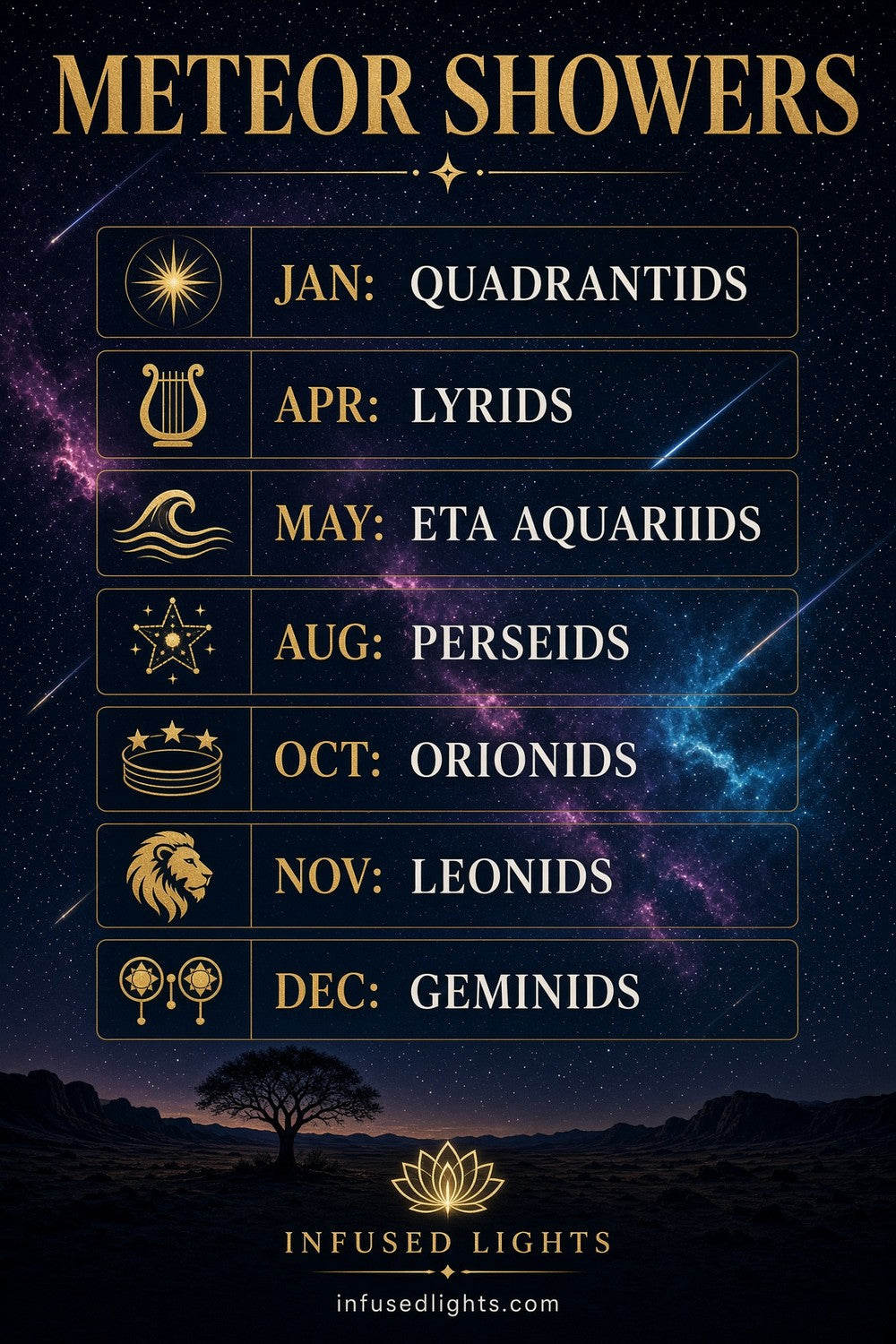
Every year the Earth passes through trails of dust left by comets. When those tiny grains meet our atmosphere they flare into the streaks we call shooting stars. Because the Earth crosses the same trails each year, meteor showers return on a reliable calendar.
The major showers
- Quadrantids: early January, a short but strong peak.
- Lyrids: late April, one of the oldest recorded showers.
- Eta Aquariids: early May, debris from Halley's Comet.
- Perseids: mid August, warm nights and bright meteors.
- Orionids: late October, also from Halley's Comet.
- Leonids: mid November, famous for occasional storms.
- Geminids: mid December, often the richest shower of the year.

Tips for a good night
- Get away from city lights if you can, and check the moon phase, since a bright moon washes out fainter meteors.
- Give your eyes twenty to thirty minutes to adjust, and put your phone away.
- Lie back on a blanket and look at a wide patch of sky rather than one spot.
- The hours after midnight are usually best.
A meteor shower is a beautiful excuse to slow down outside. Pair it with our Moonlight Journal practice or read Cosmic Wonder Without the Circus.
Can we pray for you?
Fill out a request here, and we will gently hold your prayer, intention, or gratitude in light.


