



Long before seed packets came with printed calendars, gardeners looked up. Planting by the moon is an old rhythm shared by farmers across many cultures, and it is still a lovely way to slow down and pay attention to the sky while your hands are in the soil.
The basic rhythm
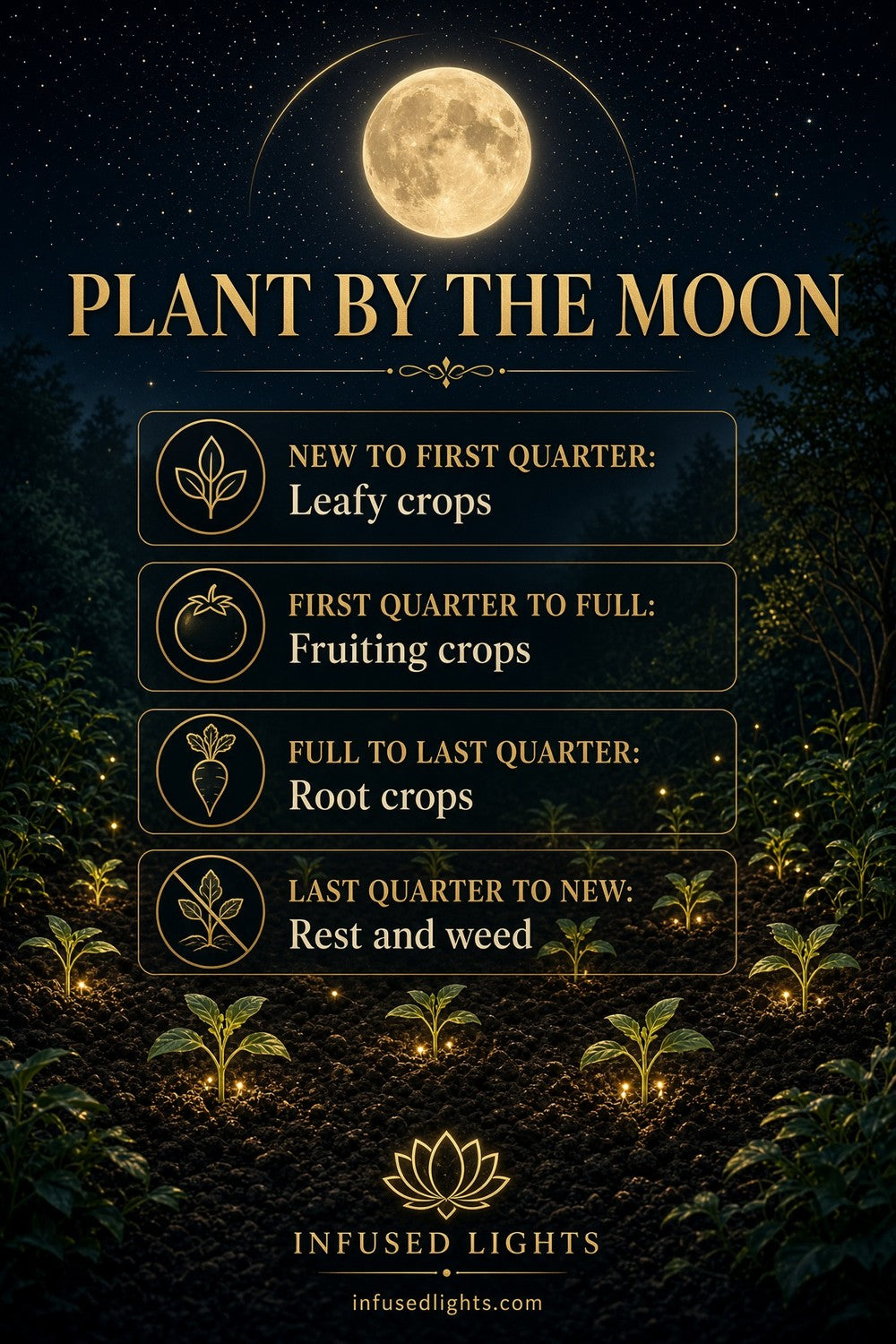
New moon to first quarter: the waxing light is traditionally linked with leafy crops that grow above ground, like lettuce, spinach, kale and herbs.
First quarter to full moon: a favorite window for fruiting plants such as tomatoes, beans, squash and peppers.
Full moon to last quarter: as the light wanes, many gardeners turn to root crops and bulbs: carrots, beets, potatoes, garlic and onions.
Last quarter to new moon: a resting phase. Weed, mulch, compost, prune and plan.

How to try it without stress
Treat the moon as a gentle guide rather than a strict rule. Your local frost dates, soil temperature and weather still matter most. Keep a small garden journal, note the phase each time you sow, and watch what you learn over a season or two. Many people find the practice simply makes them more present in the garden.
If you love pairing nature with reflection, read Garden Dirt as Lightworker Medicine and our Moonlight Journal practice.
Questions people ask
What should I plant during a waxing moon?
Gardeners traditionally sow leafy crops near the new moon and fruiting plants as the moon grows toward full.
When do I plant root crops by the moon?
Root crops and bulbs are traditionally planted as the moon wanes after the full moon.
Does moon planting replace frost dates?
No. Local frost dates, soil temperature and weather still come first. The moon is a gentle extra rhythm.
Related reads


Try a free reading: Meet Your Guardian Angel · Chakra Check · Starseed Origin · Lightworker Type · Find a healer or guide in the Light Network
Can we pray for you?
Fill out a request here, and we will gently hold your prayer, intention, or gratitude in light.


